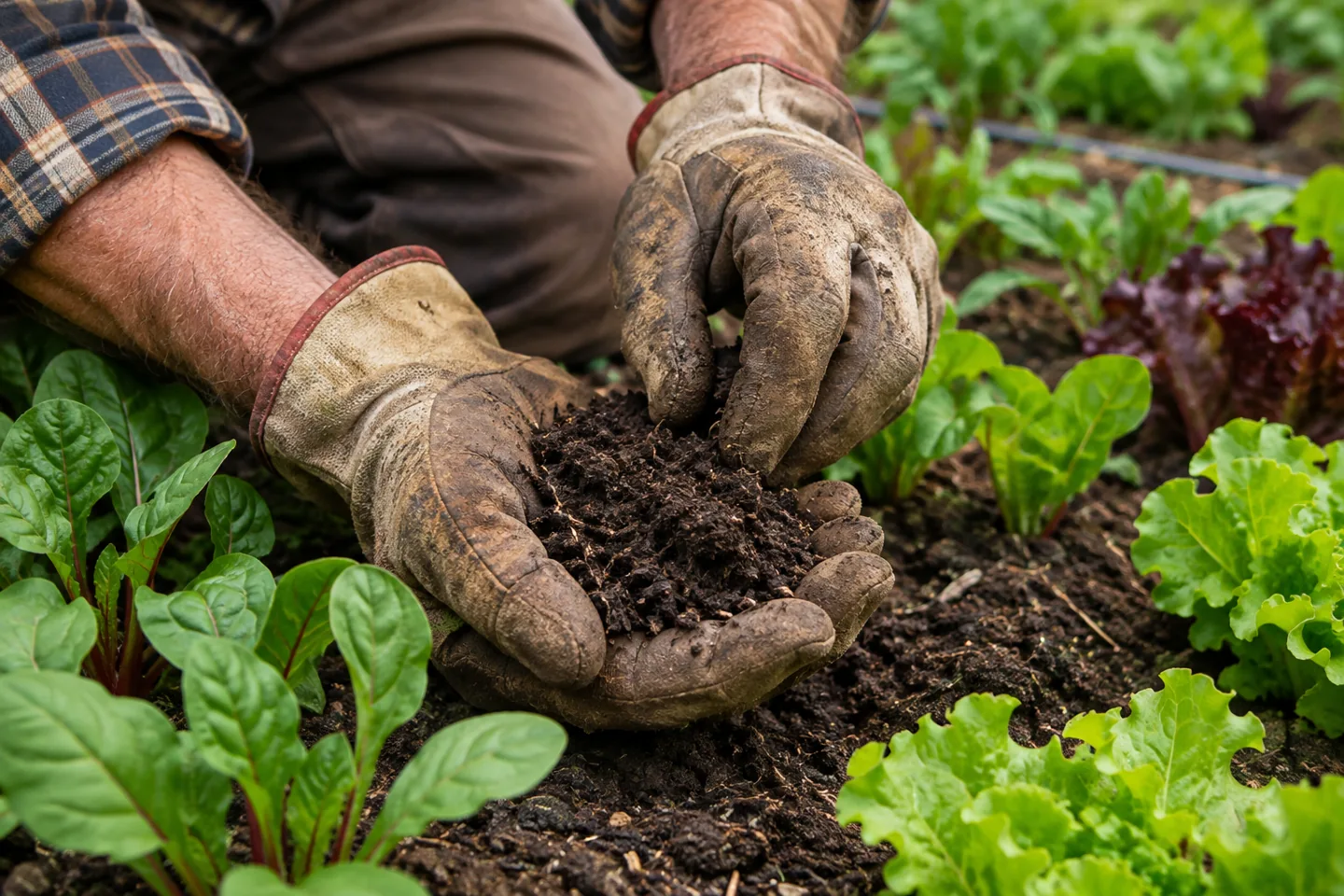
Start with the soil already in the bed
Sample the actual rooting mix. An older bed that receives compost every year can have a different nutrient profile from a new bed built from topsoil and compost. Use recommendations for your vegetable crop and note any phosphorus or potassium the test already shows is sufficient. Raised beds may dry more quickly than surrounding soil, particularly where the mix drains well. Oregon State University Extension · Utah State University Extension
Dry versus liquid
| Option | Fit | Check first |
|---|---|---|
| Dry meal, pellet or granule | Measured preplant or side-dress applications when the label permits | Bed area, nutrient analysis, timing and placement |
| Liquid | A measured application with a watering or application setup listed on the label | Concentrate measurement, permitted dilution and frequency |
Keep the area and product rate in the same units. A 4 ft × 8 ft bed is 32 sq ft. If a label calls for 2 lb of that product per 100 sq ft, the scaled amount is 0.64 lb for this bed. This example illustrates the calculation, and the actual amount depends on the label and soil recommendation.
Calculate liquid concentrate separately
If a label calls for 1 fluid oz of concentrate per gal of final solution and your watering can holds 2 gal, measure 2 fluid oz of concentrate and dilute according to the label. Record concentrate used across applications so the total is clear. This is a hypothetical label rate.
Before making a second application
Review the season’s nutrient additions and check soil moisture and drainage if growth is poor. Compare the crop’s development with local Extension guidance before deciding that another application is needed. Oregon State University Extension
Compare materials in the guide to ten organic fertilizer types.